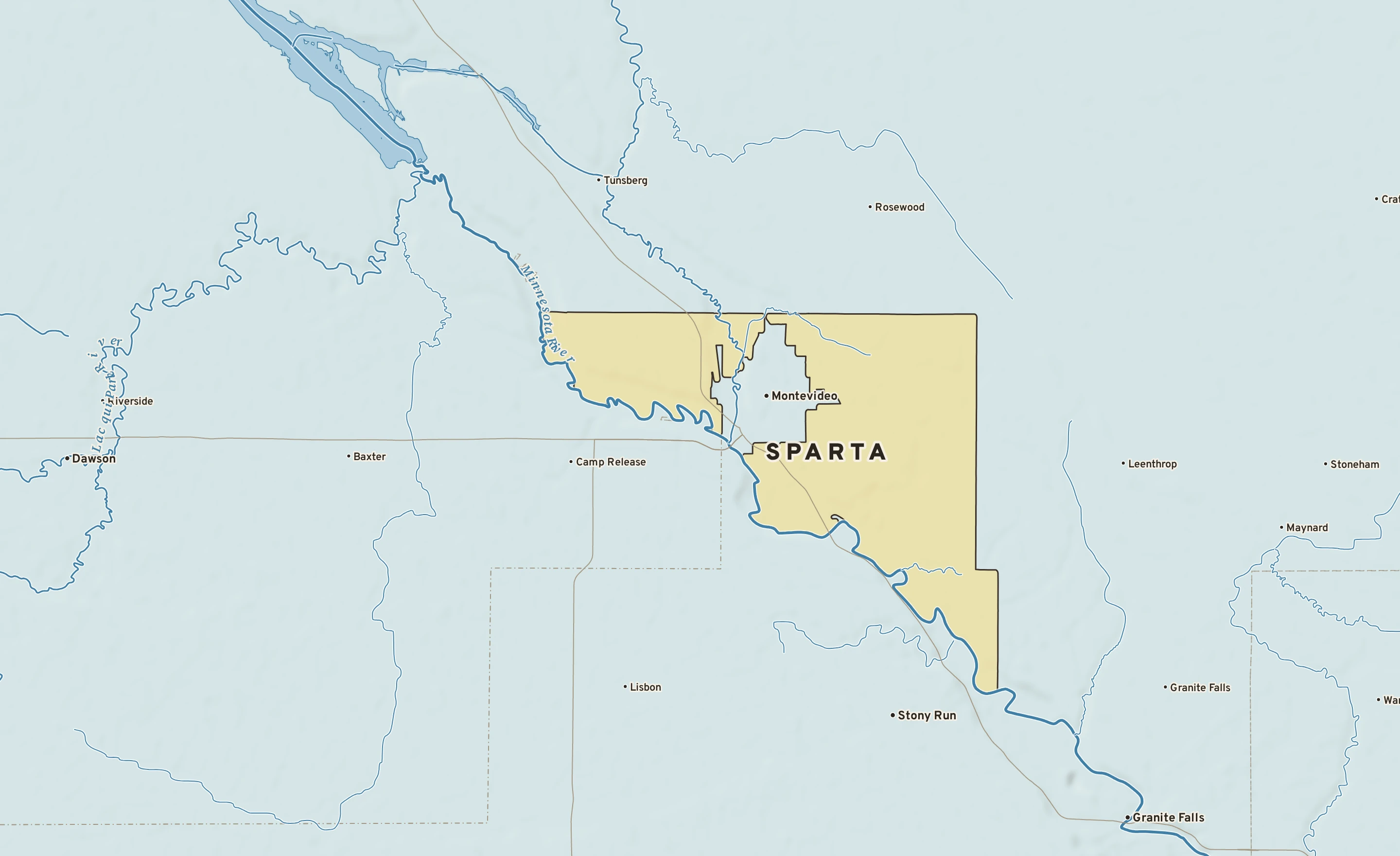
Sparta has a hot-summer humid continental climate. Summer afternoons average 85° in July; winter nights fall to about 4° in January. A normal year brings about 51 inches of snow; with the rain, that comes to about 27 inches of water.
July, average85° / 61° · high / low, the warmest month
January, average24° / 4° · high / low, the coldest month
Rain and melted snow27.4 in · wettest months: July and June
Snow a year51.0 in · snowiest: February
Hottest on record113°F · July 21, 1934
Coldest on record−42°F · February 16, 1936
Wettest day on record9.78 in · July 4, 1995
Snowiest day on record15.0 in · April 11, 2008
90° days a year19 · very few reach 100°
Nights at or below 32°164 · and 70 days that stay below freezing
Climate typeHot-summer humid continental · Köppen Dfa
1Freeze season · from the first fall freeze, about Sept. 29, to the last in spring, about May 3 (median dates)
2Highs below freezing · Dec. 7 to Feb. 25; normal highs stay below 32°
3Lows below freezing · Oct. 28 to April 9; normal lows fall below 32°
4Wettest stretch · June through August: 11.7 of the year’s 27.4 inches
NOVEMBER 14 IN THE RECORDOn November 14 Sparta normally reaches 44° and falls to 25°. The record high is 72°, in 2025; the record low −10°, in 1940. The most rain on this date, 1.25 in, fell in 1927.